Building a Remote 'Culture Committee' Without Forced Fun
Building a Remote 'Culture Committee' Without Forced Fun
Key points: Forced virtual socialization often damages morale and exacerbates screen fatigue. True remote culture thrives on asynchronous activities and interest-based communication channels rather than mandatory video calls. Empowering bottom-up initiatives and measuring employee engagement through the Employee Net Promoter Score (eNPS) tracks genuine progress without relying on performative fun.
The abrupt transition to remote work fundamentally altered how colleagues interact, stripping away spontaneous office interactions and replacing them with scheduled virtual meetings. While companies initially scrambled to maintain team cohesion, many defaulted to mandatory virtual happy hours and online trivia nights. Instead of boosting morale, these initiatives often inadvertently damaged it, leading to widespread resentment. The solution to building a genuine company culture does not rely on forced socialization. Rather, it requires fostering organic connections, respecting asynchronous workflows, and empowering employees to shape their own professional interactions.
Why forced social events fail in remote settings
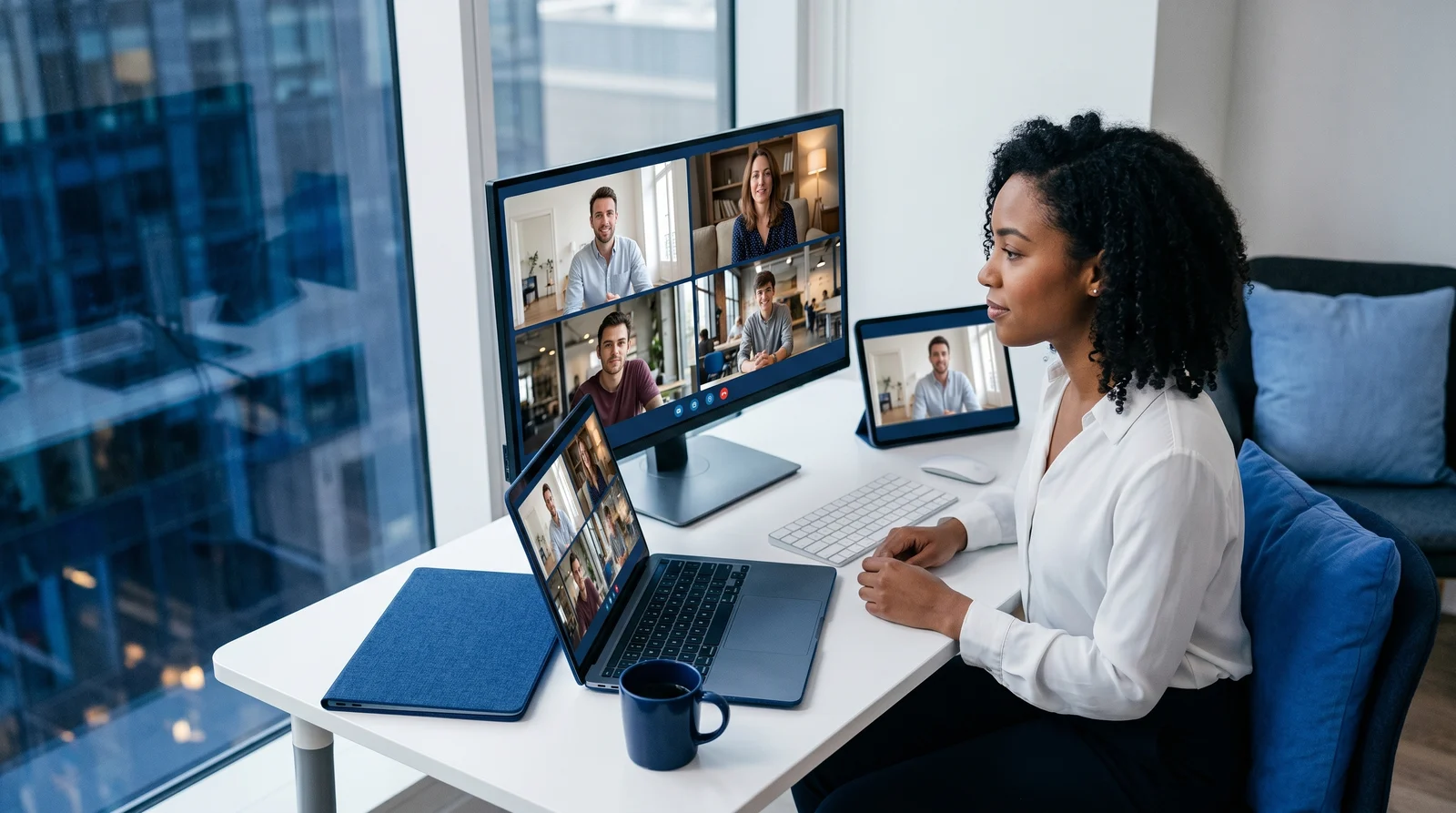
The modern digital workplace is characterized by a high cognitive load. When leaders mandate participation in after-hours Zoom game nights or virtual icebreakers, they often misread the room. The primary issue is not that employees dislike each other; it is that they are structurally exhausted by the medium of communication.
Recent data paints a stark picture of virtual exhaustion. A staggering 80 percent of workers report experiencing "Zoom fatigue," a phenomenon caused by the intense cognitive load required to read muted body language and process constant, close-up eye contact on screens. In Microsoft's 2021 Work Trend Index, surveys of global respondents revealed that 54 percent felt overworked, while 39 percent described themselves as outright exhausted 2.
Adding "forced fun" to this environment backfires because it simply extends screen time. According to a 2025 State of the Team report by Team Dynamics, 60 percent of remote workers actively dislike traditional virtual team-building activities, and 44 percent take active measures to avoid them entirely.
The physiological toll is also documented. Research from Microsoft's Human Factors Lab, utilizing electroencephalogram (EEG) caps, demonstrated that back-to-back virtual meetings cause a steady accumulation of beta waves in the brain, which are associated with stress(https://vertexaisearch.cloud.google.com/grounding-api-redirect/AUZIYQF9vHTquyf_IL74QE9xjyc7QCoDV4OEdWiz7tvNAXSNvmWC9KQJ7SZT8Z3S8OQ1kpsJSfQXTQgp3IQ6ydl_9maznkkYriQhkd8F5GcUey3RfYzxAhMGSv6VOFYzJmOO_ADUYIZX5d_1EvDPbrWkC31HMjXi63TvXcMeqh2P7LcpRcZR6if2zYQKJKZQlVrYEQs-E8C7innl). When a forced social event is tacked onto a long day of meetings, it prevents the brain from resetting, transforming what should be a relaxing activity into a source of cognitive depletion. Consequently, attempts to interject forced play into the digital workspace often appear contrived, serving as a hollow substitute for genuine remote culture(https://vertexaisearch.cloud.google.com/grounding-api-redirect/AUZIYQF95hpHlB1ML2DvIQP1ReUKDqs2SLmV7LvLcWIYa4jd6hUM7h6SOxMfdG3OMgj4xhpCeu7yjs49PL6dIi16Esk4KAol4vcxgBnD4bbnpgDaE1DDwtTI2Mt1kxNXeTc-KSmjrOf6EJt6TTqW35ESMLSbkpkBHwT4R6TgCxYZwWZ41CQrI01TPZo=).
Empowering bottom-up community initiatives
Instead of relying on a top-down "Culture Committee" that dictates how and when people should have fun, modern organizations must shift toward empowering bottom-up community initiatives. When employees have the autonomy to design their own engagement strategies, they are far more likely to participate enthusiastically and organically.
A successful approach involves crowdsourcing team-led initiatives. Leaders should provide a budget and a framework, but step back to let employees dictate the activities. This transfers ownership directly to the workforce, increasing buy-in and overall employee engagement. For example, some teams might prefer starting a knowledge-sharing book club, while others might gravitate toward a peer-recognition program.
Intentional peer recognition is particularly effective in distributed environments where achievements often go unnoticed. A Deloitte study highlighted that a well-executed employee recognition program can lead to a 14 percent improvement in engagement, productivity, and performance. Healthcare provider Concert Health, for instance, established a "Thankful Thursday" initiative where remote staff can publicly give shout-outs to their colleagues, filling the gap left by the lack of spontaneous office praise.
Additionally, companies should consider establishing visible, specialized committees dedicated to enhancing the remote work experience itself. These can include innovation groups, wellness support panels, or ergonomics committees that educate remote workers on setting up proper home offices. When employees collaborate on solving real workplace challenges, they form stronger bonds than they ever would in a virtual escape room.
The role of interest-based Slack channels
One of the most effective, low-effort strategies for fostering connection is the creation of interest-based communication channels. While platforms like Slack and Microsoft Teams are primarily used for project updates, carving out dedicated spaces for hobbies and casual conversations mimics the organic "water cooler" interactions of a physical office.
These channels serve as natural affinity groups requiring very low-pressure participation. By allowing employees to create or request channels based on shared interests, companies provide an outlet for non-work-related engagement that workers can visit on their own time. Examples of highly successful interest-specific channels include groups for video game enthusiasts, pet owners, fitness challenges, or specific television shows. At Concert Health, specialized channels ranging from #AnimalCrossing to #ConcertKiddos proved vital in helping remote social workers connect with like-minded peers.
The data supports this approach. In a 2025 analysis by FullScale, 57 percent of engineers reported feeling a stronger sense of team connection after six months of using interest-based Slack channels paired with asynchronous engagement prompts. These spaces allow employees to build relationships beyond their daily tasks, breaking down departmental silos and creating natural cross-functional mentorship opportunities without the pressure of a live video call.
Organizing asynchronous team building activities
To effectively unite distributed teams scattered across multiple global time zones, culture initiatives must decouple team building from synchronous meetings. Asynchronous activities allow participation at the individual's convenience, respecting deep work blocks and caregiving responsibilities while still fostering camaraderie.
The Asynchronous Toolkit
There are numerous ways to execute team building without requiring simultaneous presence:
- Asynchronous Bingo: Employees receive digital bingo cards filled with prompts like "Has lived on a farm" or "Speaks three languages." Over the course of a week, team members message each other to find matches, sparking organic, one-on-one conversations that do not disrupt workflow(https://vertexaisearch.cloud.google.com/grounding-api-redirect/AUZIYQGDlNjwv-AGSOcag-KYgoVokIsyVQkc4f6UoA84OLBrDj9rwWyCtUhQxal3KqJ2HAqorCGNNCVeeo9HV11jldNz_Jyydj2ok6F-aYDawzrQsPZmXfMmxxcFveLjho4d2-vvybW_6-EDW-UG0ixctrVhmBZZKj5q2Wf0f1M4IqR3).
- The GIF Battle: Popularized by Atlassian's Trello team, this simple game involves picking a weekly theme. Team members submit their best matching GIF in a dedicated chat thread, and everyone votes on their favorites. It takes seconds to participate and provides immediate comic relief.
- Collaborative Playlists: Using platforms like Spotify, teams can build shared audio environments. Creating a collaborative "Deep Work Focus" or "Friday Wind Down" playlist allows employees to share their musical tastes and feel connected through shared background audio, even when working thousands of miles apart.
- The "User Manual": Team members create brief slide decks detailing their working styles, preferred hours, communication preferences (e.g., chat versus email), and minor personal quirks. Shared in a central repository, these manuals help new hires navigate team dynamics smoothly and build immediate empathy.
By utilizing asynchronous methods, organizations ensure that social bonding does not become an administrative burden.
Measuring the effectiveness of culture initiatives
Culture is often viewed as an intangible asset, but its effectiveness can and must be measured. Relying solely on anecdotal feedback or the attendance rates of virtual events gives an incomplete, and often misleading, picture of organizational health.
The most reliable metric for tracking the success of culture initiatives is the Employee Net Promoter Score (eNPS). Originally adapted from the customer service sector, eNPS asks one simple, standardized question: "On a scale from 0-10, how likely are you to recommend working for our organization to your family or friends?" 15.
Calculating eNPS
The scoring mechanism divides respondents into three distinct categories:
- Promoters (Scores 9-10): Highly engaged employees who act as advocates for the company culture.
- Passives (Scores 7-8): Satisfied but unenthusiastic employees who are vulnerable to competitive offers.
- Detractors (Scores 0-6): Disengaged employees who may be experiencing burnout or frustration.
The final eNPS is calculated by subtracting the percentage of Detractors from the percentage of Promoters.
An eNPS score can range from -100 to +100. Benchmarks suggest that a score between +10 and +30 is healthy, +30 to +50 is strong, and anything over +50 is exceptional(https://vertexaisearch.cloud.google.com/grounding-api-redirect/AUZIYQFigDyy3avXCsCHOt8E8OoxEiVeFGT_tw7r_4a8C8D9cQWGYK-t10yEYgqzJcQnhi1wmB7p_7RP73e7c2Qzth9Bi3chKDUdvP-VRdjNXPaZcbheVu8U0ScYGLyQrbB-e03r2l94ErlYrceEoNx2J2pA6LG6OuZ351ZYPXo=). By deploying eNPS surveys quarterly, leaders can map cultural sentiment over time, identifying precisely when a new policy or asynchronous initiative positively impacts morale.
Measuring eNPS prevents leaders from operating in the dark. It shifts the focus from performative metrics—like how many people logged into a holiday Zoom party—to the actual lived experience and loyalty of the workforce.
Balancing work focus with social cohesion
The ultimate goal of any culture committee is to strike a delicate balance between driving productivity and fostering social cohesion. In a remote environment, the line between personal life and professional output is inherently blurred. Therefore, successful team building must respect boundaries.
The antidote to virtual isolation is not endless virtual socialization, but rather intentional, high-quality connections. Microsoft's brain wave research proved that short, 10-minute breaks between meetings allow the brain to reset and dramatically reduce cumulative stress. Leaders should codify these breaks into the company culture. Implementing policies such as "speedy meetings"—where 30-minute blocks are reduced to 25 minutes to guarantee a break—shows a systemic commitment to employee wellbeing.
When social cohesion initiatives are woven seamlessly into the fabric of the workday—through a quick meme shared in a Slack channel, a recognized peer achievement, or a collaborative playlist—they do not compete with deep work. Instead, they enhance it. Employees who feel their time and energy are respected are far more likely to engage with their peers authentically. By dismantling the era of forced fun, companies can cultivate a mature, resilient remote workplace where genuine connection drives collective success.
Key Takeaways
- Ditch the forced fun: Mandatory virtual social events increase cognitive load and screen fatigue, actively driving disengagement among remote workers.
- Empower bottom-up initiatives: Allow employees to design their own engagement strategies, such as peer-recognition programs and wellness committees, to increase authentic participation.
- Leverage asynchronous tools: Utilize activities like asynchronous bingo, GIF battles, and collaborative playlists to build camaraderie without disrupting deep work or spanning difficult time zones.
- Create spaces for hobbies: Implement interest-based Slack channels to simulate the organic, low-pressure "water cooler" conversations of a physical office.
- Measure via eNPS: Track the tangible success of your cultural initiatives by consistently calculating your Employee Net Promoter Score, rather than relying on event attendance.
- Prioritize brain breaks: Adopt policies that shorten meeting times, allowing employees crucial minutes to decompress and reduce accumulated stress.