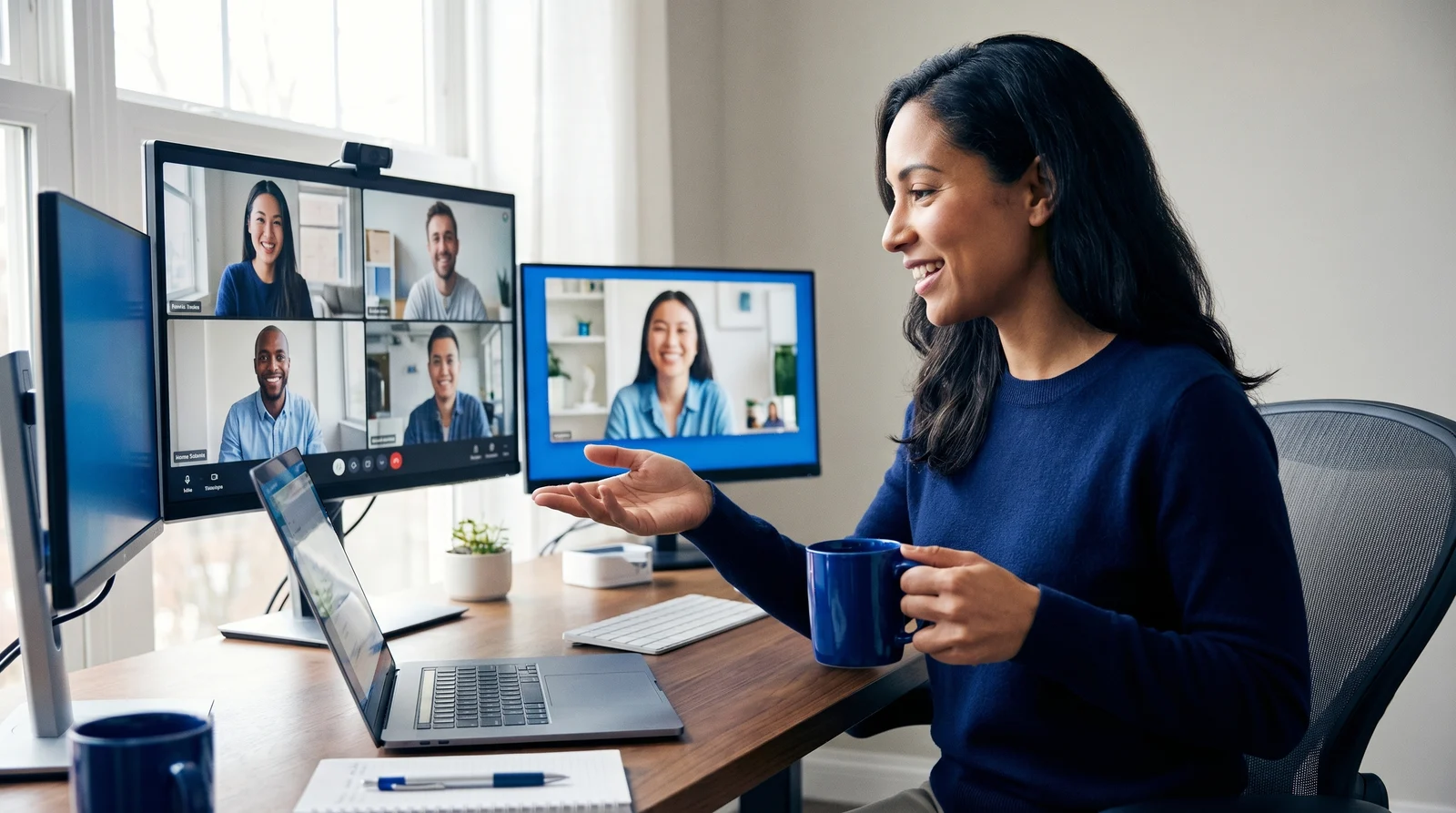
Mentoring Through the Screen: Structuring Career Development for Junior Remote Employees
Mentoring Through the Screen: Structuring Career Development for Junior Remote Employees
For a generation of professionals whose first career steps happened via a webcam, navigating the modern workplace is uniquely challenging. As organizations pivot toward permanent distributed models, leaders face a critical hurdle: how to integrate, train, and champion junior employees who have never shared a physical office with their mentors. The evidence suggests that while remote work offers profound flexibility, it inadvertently isolates early-career talent, stripping away the osmotic learning of the traditional office. Solving this requires a deliberate approach to virtual career development, replacing serendipitous hallway chats with structured, psychologically safe remote mentorship.
- Gen Z and Isolation: Recent data indicates young workers struggle significantly with remote isolation and lack of casual learning.
- Structured Mentorship: Predictable, metric-driven programs vastly outperform ad-hoc coaching arrangements.
- Virtual Coworking: Intentional screen-sharing and pair-working successfully replicate "over-the-shoulder" observation.
- Psychological Safety: Dedicated frameworks and emotional check-ins help juniors voice uncertainties without fear of judgment.
The Unique Challenges of Integrating Junior Staff into Distributed Teams
The Generational Divide in Remote Work Preferences
Managing junior remote employees requires understanding their distinct relationship with the digital workplace. While older generations often champion the work-from-home model for its flexibility, recent data reveals a surprising trend among younger professionals. According to May 2025 Gallup findings, only 23% of remote-capable Generation Z employees prefer fully remote work, representing the lowest share of any generation.
This demographic reports acute feelings of isolation. A staggering 27% of Gen Z workers admit to feeling lonely "a lot of the day," nearly triple the rate of older generations. Furthermore, 86% of these young professionals prioritize mentorship and on-the-job learning, elements that naturally flourish in physical spaces but require intense deliberation to replicate remotely.
International and Cross-Border Complexities
The challenges multiply when organizations hire junior talent across borders. Distributed leadership must account for international professionals who face unique logistical and cultural hurdles. Navigating time zone differences, adjusting to new workplace norms, and handling complex digital nomad visa processes or relocation logistics add layers of stress to the junior employee experience. Language barriers and differing cultural expectations around communication styles can impede the flow of information. Without the natural social scaffolding of an office environment, these employees often lack the necessary visibility to secure guidance, making proactive mentorship not just a perk, but an operational necessity.
Replacing the Traditional Over-the-Shoulder Learning Experience Virtually
Implementing Virtual Coworking Sessions
The most significant casualty of the remote transition is the loss of passive, over-the-shoulder learning. In a physical office, a junior employee can quietly observe a senior colleague navigating a complex internal system or handling a difficult client call. To replicate this dynamic in remote team training, companies must formalize virtual job shadowing.
One highly effective method is the implementation of virtual coworking blocks. This involves a mentor and mentee joining a video conferencing call, sharing their daily task lists, and then muting their microphones while leaving their video feeds active. As they work independently on their respective tasks, the junior staff member can easily unmute to ask quick, ad-hoc questions. This "virtual shared cubicle" lowers the barrier to communication and provides the psychological safety needed to acquire practical knowledge in the moment.
Remote Observation and Documentation
Beyond silent coworking, deliberate observation sessions are vital. Senior employees can host dedicated screen-sharing sessions where they narrate their decision-making process in real-time. Recording these sessions creates an invaluable library of best practices that new hires can review repeatedly. Utilizing collaborative workspaces where mentors document their steps and new hires can leave annotated questions directly on the document further bridges the physical gap between teacher and student.
Designing a Structured and Measurable Remote Mentorship Program
Defining Clear Goals and KPIs
Ad-hoc advice is not a replacement for a formal remote mentorship program. Successful virtual career development requires establishing SMART (Specific, Measurable, Achievable, Relevant, and Time-Bound) goals directly tied to the organization's broader objectives, such as leadership readiness, internal mobility, or closing diversity representation gaps.
Program coordinators must track progress using concrete Key Performance Indicators (KPIs). Effective metrics include participation rates among underrepresented groups, cross-region collaboration rates, and the comparison of self-assessments before and after program completion. Advanced HR teams also utilize predictive analytics to monitor performance patterns and engagement indicators to identify retention risks early.
Real-World Success Frameworks
Consider the approach taken by pest management leader Rentokil-Terminix. Facing high frontline attrition and the costly loss of training investments, the company launched a structured onboarding buddy program. By defining participant profiles, leveraging automated orientation workflows, and setting clear milestones, they drastically increased early engagement and retention. Mentorship programs must feature well-defined agendas, dependable communication tools, and strict expectations regarding meeting attendance to ensure the relationship does not devolve into unstructured, unproductive catch-ups.
Utilizing Screen-Sharing and Pair-Working for Real-Time Coaching
The Driver and Navigator Dynamic
Beyond passive observation, active pair-working is a highly effective remote training methodology. Adapted from software development's concept of "pair programming," this collaborative technique involves two employees working on a single task simultaneously via screen sharing.
Typically, this framework utilizes two distinct roles. The "Driver" physically controls the keyboard and executes the task, focusing on the immediate practical steps. The "Navigator" acts as the strategic observer, reviewing the work in real-time, asking critical questions, and brainstorming alternative solutions. When pairing a junior and senior employee, this alternating dynamic accelerates onboarding, prevents the formation of knowledge silos, and provides instant, actionable feedback.
Structuring the Pair-Working Session
To ensure these sessions are productive rather than exhausting, distributed leadership should implement strict time management frameworks. The Pomodoro technique—working in focused 25-minute intervals followed by a short break—is highly recommended. Mentors and mentees should rotate the Driver and Navigator roles frequently to keep both parties engaged and to prevent the senior employee from simply taking over the task. Starting the day with a calendar check to agree on pairing hours ensures that regular work commitments are not neglected.
Creating Psychologically Safe Virtual Spaces for Asking Novice Questions
The Foundation of Psychological Safety
Psychological safety refers to the shared belief that an individual will not be punished, humiliated, or reprimanded for speaking up, sharing ideas, or admitting mistakes. In virtual environments, where tone is easily misinterpreted and physical reassurance is absent, silence often masks deep confusion. Psychological safety develops in distinct stages: inclusion safety (feeling accepted), learner safety (feeling safe to ask questions), contributor safety (sharing ideas), and challenger safety (questioning the status quo).
Practical Tools for Emotional Check-Ins
Leaders must proactively design environments where junior staff feel comfortable exposing their knowledge gaps. One highly practical approach is the "Traffic Light Check-In," a brief exercise utilized at the start of virtual meetings. Team members take a moment to state their current emotional bandwidth: green signifies they are focused and calm, yellow indicates they are slightly stressed but functioning, and red means they are entirely overwhelmed.
This 60-second habit normalizes vulnerability and gives mentors context for how to approach feedback on any given day. Furthermore, leaders must model openness by acknowledging their own mistakes and actively inviting pushback, ensuring that novice questions are celebrated as signs of engagement rather than penalized as incompetence.
Tracking Progression and Celebrating Early Career Milestones Remotely
Establishing Clear Career Pathways
In a physical office, career progression is highly visible through changing desk locations, new responsibilities, and public promotions. Remotely, achievements can easily go unnoticed, leading junior employees to feel stagnant. It is essential to implement transparent role progression maps with clear timelines and skill requirements. Setting concrete 30, 60, and 90-day milestones provides junior staff with a predictable roadmap, allowing them to visualize their future within the organization.
Digital Recognition and Rituals
When these milestones are reached, intentional digital recognition is required to build morale. Zapier, a prominent remote-first organization, utilizes a dedicated Slack channel named "#props" specifically for peer-to-peer recognition, fostering a robust culture of continuous gratitude.
Managers should also look beyond standard performance reviews. Recognizing work anniversaries, the completion of difficult certifications, or a junior employee's first successful solo client interaction creates lasting engagement. Utilizing digital badges, personalized e-gift cards, and monthly virtual recognition ceremonies ensures that remote juniors remain motivated, feel deeply valued, and stay connected to the broader company mission.
Key Takeaways
- Understand the Audience: Gen Z and junior remote workers crave structure and human connection; remote flexibility alone is not a substitute for hands-on mentorship.
- Replicate the Office: Utilize virtual coworking and screen-sharing to mimic the passive, over-the-shoulder learning that happens naturally in physical workspaces.
- Measure the Impact: A successful mentorship program must be grounded in SMART goals and measurable KPIs, such as retention rates and internal mobility tracking.
- Encourage Pair-Working: Adopt the Driver/Navigator framework from software development to provide real-time coaching across any digital discipline.
- Foster Safety: Implement micro-habits like the Traffic Light Check-In to create an environment where junior staff feel safe admitting mistakes and asking novice questions.
- Celebrate Publicly: Use dedicated digital channels and virtual rewards to ensure early career milestones do not go unnoticed in a distributed environment.
Sources:
- gallup.com
- theinterviewguys.com
- scale.jobs
- euruni.edu
- usemultiplier.com
- myshyft.com
- psychologytoday.com
- qooper.io
- chronus.com
- mavenside.co
- qooper.io
- 6q.io
- distantjob.com
- binarynoggin.com
- reddit.com
- martinfowler.com
- icert.org.in
- geniuswithin.org
- ahead-app.com
- ahead-app.com
- mai-avto.ru
- ignitehcm.com
- signalfire.com
- terryberry.com
- openmedscience.com