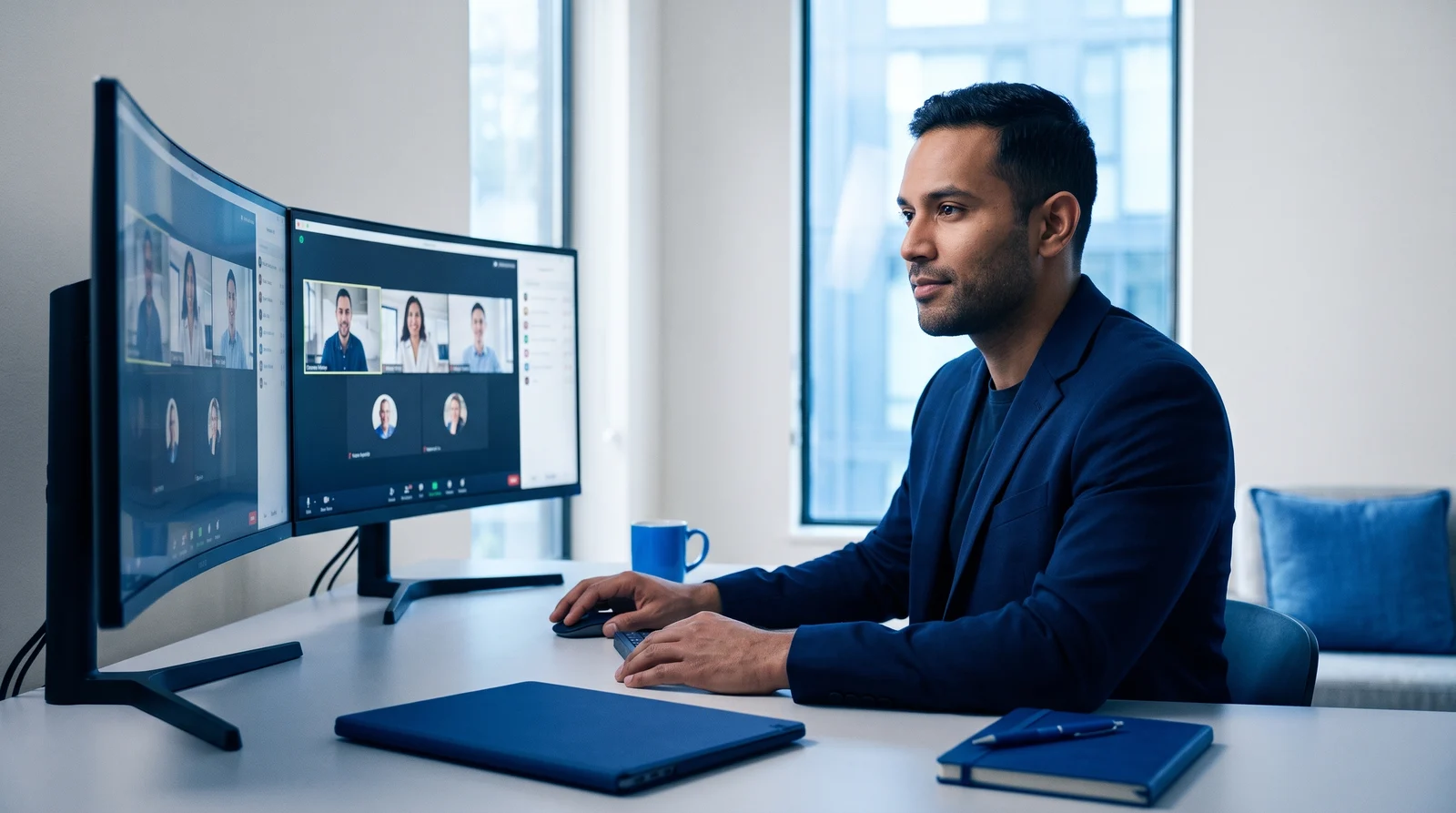
Running High-Impact Remote All-Hands Meetings
Running High-Impact Remote All-Hands Meetings
Remote and hybrid work models have stabilized as the new default for knowledge workers, with recent data showing that 51% of remote-capable employees operate in hybrid setups and 28% work fully remotely. While this shift offers undeniable flexibility, it has fundamentally broken the traditional all-hands meeting. What was once a unifying, energy-building event in a physical office space has largely devolved into a one-way broadcast where attendees discreetly catch up on emails with their cameras off. With remote workers experiencing unique pressures—including a paradoxically high 45% rate of daily stress alongside their engagement—remote leadership must rethink how they gather their teams. To foster genuine team engagement, organizations need to transform their remote all-hands from a mandatory lecture into a dynamic, interactive, and highly strategic experience.
1. Why your remote all-hands is losing engagement
It is a common scenario in distributed companies: executives present slide after slide while the rest of the company sits in silence. If you feel like your team is tuning out, the data confirms your suspicions. Research indicates that 43.8% of attendees frequently or always 2 multitask during virtual meetings, with an additional 40.3% doing so occasionally. Without the social pressure of a physical conference room, participants naturally drift toward checking emails or replying to instant messages.
Engagement drops because virtual meetings place a different cognitive load on attendees than in-person gatherings. The average employee already spends a significant portion of their week navigating virtual communication, which can lead to severe screen fatigue. Furthermore, a 2024 workplace analysis found that only 33% of United States 5 employees are actively engaged at work. Fully remote workers do report higher baseline engagement (31%) than their on-site counterparts (19%), but they also report the lowest levels of overall thriving (36%) and the highest levels of stress (45%).
When an all-hands meeting lacks structure, relevance, and interactivity, it exacerbates this stress by wasting valuable focus time. Furthermore, the persistent issue of proximity bias means that remote workers often feel isolated from decision-making processes. Surveys show that 55% of managers still view 7 in-office employees as harder working and more trustworthy than remote colleagues. If remote meetings fail to bridge this gap, distributed employees will continue to disengage, viewing the all-hands as an irrelevant corporate formality rather than a vital touchpoint for team engagement.
2. The 15-minute limit: How to prioritize content
To combat screen fatigue and multitasking, remote leadership must respect the biological limits of human attention. Cognitive research on lecture attention consistently lands on a critical threshold: learners begin losing focus after 9 10 roughly 10 to 15 minutes of passive listening.
The 47-Second Rule
The challenge is even more acute in digital environments. The average attention span on a 11 single point on a screen is just 47 seconds before attention naturally drifts. If a single speaker lingers on a dense, text-heavy slide for several minutes, they are speaking to distracted minds. To maintain momentum, presentations must be highly visual. Studies show that people retain approximately 65% of 11 visual information after three days, compared to only 10% of spoken information.
Chunking the Agenda
To prioritize content effectively, leaders should implement a strict 15-minute limit for any single segment of the all-hands meeting. If a topic requires 45 minutes of explanation, it should be divided into three shorter blocks, interspersed with interactive moments or different speakers(https://vertexaisearch.cloud.google.com/grounding-api-redirect/AUZIYQFxO4Y1KlD2DQgu65xEKf_VMeXqoJkvFIprAVwAooPud_-3ef2Pcm-jMMdDYpilX6OFiq20SQhFOf-uYnRTI14BqHP73Z_wh2x3Yq1HDRXpvFse5n8OQ7OL68LCgl4vZ4eS3pdMTwdlTZ4a5tcL4bSDiMmt5ZPjz5R5ncGa). A well-paced 60-minute agenda might look like this:
- 5 to 10 minutes: Opening and interactive icebreaker.
- 15 minutes: Core business updates and strategic vision.
- 10 minutes: Department spotlights or deep dives.
- 5 to 10 minutes: Employee recognition and celebrations.
- 15 to 20 minutes: Open Q&A and discussion.
By strictly timeboxing each segment, presenters are forced to distill their messages to the essentials, keeping the energy high and the audience engaged.
3. Replacing 'status updates' with 'strategic impact' stories
One of the fastest ways to kill team engagement during an all-hands meeting is to treat it as an oversized daily standup. Reciting a litany of routine status updates—what was completed on Monday, what was deployed on Tuesday—is a poor use of synchronous time. Employees already know that nobody retains these granular details, and the format encourages listeners to tune out until their specific department is mentioned.
Shifting to Strategy and Wins
Instead of endless updates, use the all-hands format to focus on strategic impact. Remote meetings should highlight the "why" rather than the "what." Leaders should discuss shared wins that cross departmental silos. For example, rather than having marketing and sales separately list their weekly activities, present a unified story about how their collaboration achieved a major conversion target.
Asynchronous Updates
Routine project statuses, metric dashboards, and tactical readouts should be moved to asynchronous channels. A well-crafted written update or a short, pre-recorded video allows managers and stakeholders to skim the information on their own time. This frees up the synchronous all-hands meeting for strategic discussions, focusing on what is working, what is slowing the organization down, and what major pivots are planned for the upcoming quarter(https://vertexaisearch.cloud.google.com/grounding-api-redirect/AUZIYQHWPci-vTmvMytr_qCzSe_U9Jqo0YZ7ya__Uy6j52gfHsvGLJqSqgJ5jxhug3aqNVUsm7DjWBI0iMZI-g94IgWZf0ZcfW-w78GVFS5MnC7vKA2VYDpHBiNSssCD_5Crtqr6FYoi-lRBc7-qj4PcNNzrVfPljX7u0VtiyhNpmZ6Bb3-Eq4Zgbr2w0AF2-BGJ0Ed3t-U=).
4. Interactive tools for real-time remote participation
An effective all-hands meeting must be a two-way conversation rather than a one-way broadcast. Fortunately, a robust ecosystem of interactive tools exists to facilitate real-time participation, breaking up the monotony of passive listening.
Purpose-Built Engagement Platforms
For large professional audiences, native video conferencing chat is rarely sufficient. Tools like Slido 15 16 are considered the industry standard for enterprise Q&A and polling, integrating seamlessly with platforms like Zoom and Microsoft Teams. Slido allows for moderated, crowdsourced questions where users can upvote the most pressing topics, ensuring that leadership addresses what the team actually cares about(https://vertexaisearch.cloud.google.com/grounding-api-redirect/AUZIYQH68ol6JWi7rMGVxeoGw7N7cwdrWOZgUcWKljp7n8q_2izWVjU-Bo1tQ_TZgYGUnTQlusCg6KWdEO1gV1JSasrmVOH--wZjXJDh9hoIcqDF0VQwCdaOvbUisjdtz4Wei7FWeNohZRDPV3hyzxd2).
Mentimeter 16 17 is another powerful option, excelling in visual interactivity. It allows presenters to embed live polls, word clouds, and rating scales directly into their slide decks, generating real-time visualizations of audience sentiment(https://vertexaisearch.cloud.google.com/grounding-api-redirect/AUZIYQFMnANDRjG8U2GFuP7KcIY0DMDLdBTIuMgck-xEJw-TI1AauIt41KEjOosL9SVbT89SnGQ6NXtvLup1NVLt1iLvUBGQw97Wx0pmtIppAivu6vqTFT-FPNx0hKEC0bu-Lt7ElXGu74MaSp0Khcw-nr2lhBs=). For more energetic or training-focused segments, gamified tools like Kahoot! can inject competitive energy into the room, though they should be used sparingly to maintain a professional tone(https://vertexaisearch.cloud.google.com/grounding-api-redirect/AUZIYQFMnANDRjG8U2GFuP7KcIY0DMDLdBTIuMgck-xEJw-TI1AauIt41KEjOosL9SVbT89SnGQ6NXtvLup1NVLt1iLvUBGQw97Wx0pmtIppAivu6vqTFT-FPNx0hKEC0bu-Lt7ElXGu74MaSp0Khcw-nr2lhBs=) 19.
Integrating these tools every 10 to 15 minutes forces the audience to switch from a passive listening mode to an active participation mode, effectively resetting their attention clocks and deepening their investment in the meeting's outcome.
5. Handling Q&A sessions to encourage genuine feedback
The Q&A segment is arguably the most critical component of a remote all-hands meeting. It is the designated space where psychological safety is tested and organizational trust is built. However, asking "Does anyone have any questions?" to a grid of silent, muted video squares is a recipe for awkward silence.
Embracing Anonymity
To encourage genuine feedback, utilize tools that allow for anonymous submissions. When employees can ask questions without fear of retribution or sounding uninformed in front of the entire company, they surface the most critical and 21 honest issues. Allow questions to be submitted and upvoted days in advance, so leadership has time to prepare thoughtful answers.
The Power of Radical Transparency
Companies that excel at remote leadership lean heavily into transparency during Q&A. For example, Netflix 22 23 attributes its exceptional 95% employee retention rate largely to its culture of radical candor and transparent communication. By addressing difficult topics head-on—whether it is a missed revenue target, a strategic pivot, or an organizational restructuring—leaders build profound trust. Never dismiss or deflect challenging questions. If you do not have the complete answer, acknowledge the concern directly, explain what can and cannot be shared, and commit to following up(https://vertexaisearch.cloud.google.com/grounding-api-redirect/AUZIYQGKTOvAtZlqwTv3kzw0Bm2CZ_qwJvpaKCaaEdQptnYCW2jq-td_Ht0t4Zy7hpY9_ztzNitKmNltN6msIld4xMhYd9_fBbRSB239MSte8So20cmnIad_9OCLwy4Wk8qjvSN5kAthvjlXEpQUjMK-jBcRDxqCLB9D0cj-6K5mrX1VzfoBBigyyYBrOic1ic1cQre6VcH_DnHhCg4a8W6Ae92abW3qwF10cO6iwqeiyEx_98LlQ8XjpaHV3OEYi0EfXDMRww==).
6. The importance of post-meeting recording and transparency
In a distributed organization spanning multiple time zones, it is practically impossible to find a single meeting time that works perfectly for everyone. Live attendance should not be a prerequisite for being informed. The true value of an all-hands meeting extends well beyond the live event, relying heavily on post-meeting documentation.
Recording and Asynchronous Access
Every remote all-hands must be recorded and distributed promptly—ideally within 24 hours while the context is still fresh(https://vertexaisearch.cloud.google.com/grounding-api-redirect/AUZIYQGKTOvAtZlqwTv3kzw0Bm2CZ_qwJvpaKCaaEdQptnYCW2jq-td_Ht0t4Zy7hpY9_ztzNitKmNltN6msIld4xMhYd9_fBbRSB239MSte8So20cmnIad_9OCLwy4Wk8qjvSN5kAthvjlXEpQUjMK-jBcRDxqCLB9D0cj-6K5mrX1VzfoBBigyyYBrOic1ic1cQre6VcH_DnHhCg4a8W6Ae92abW3qwF10cO6iwqeiyEx_98LlQ8XjpaHV3OEYi0EfXDMRww==) 24. Innovative remote organizations prioritize asynchronous access by recording their global town halls and maintaining an active chat channel where team members in other time zones can still ask questions and participate after the fact(https://vertexaisearch.cloud.google.com/grounding-api-redirect/AUZIYQGKTOvAtZlqwTv3kzw0Bm2CZ_qwJvpaKCaaEdQptnYCW2jq-td_Ht0t4Zy7hpY9_ztzNitKmNltN6msIld4xMhYd9_fBbRSB239MSte8So20cmnIad_9OCLwy4Wk8qjvSN5kAthvjlXEpQUjMK-jBcRDxqCLB9D0cj-6K5mrX1VzfoBBigyyYBrOic1ic1cQre6VcH_DnHhCg4a8W6Ae92abW3qwF10cO6iwqeiyEx_98LlQ8XjpaHV3OEYi0EfXDMRww==).
Summaries and Action Items
Do not simply drop a raw, hour-long video file into a company channel and expect it to be watched. Utilize AI-powered transcription and summarization tools to provide searchable transcripts, key takeaways, and indexed video chapters(https://vertexaisearch.cloud.google.com/grounding-api-redirect/AUZIYQFFNrK9cfP1jakvC7O-qmPfM4B3gXA5cxvAovWCvv-EGBLT00UzwDhV-Or100D7sV-aS-zx9DDJCfwXt8GTH8usLgMW51syqDZyPS9VThtmtuCWA1dPKGNgEtFfd2YmIjTyytzPuwsWI90=). This allows employees to jump directly to the segments most relevant to their work. Furthermore, every meeting should conclude with explicit, actionable next steps, clearly defining what decisions were made and who is responsible for follow-up(https://vertexaisearch.cloud.google.com/grounding-api-redirect/AUZIYQElhBknlMzxo53aTtKVTXyNbAG6QgycbUixNIlLcJP0hkrUeDtK5wU9gugVIjlq1AtIorM_Rz81MymTG3yL0uJiKVGqBk9DLQlKQP5wp4F6NdjPU9-zRF35XnrozDtCd5qM3Jy6ZZoTA_6PtRoStOvWKQbfSA==) 25. This documentation provides a transparent record that reinforces alignment and accountability across the entire remote workforce.
7. How to rotate speakers to highlight distributed talent
A common pitfall in remote all-hands meetings is allowing a single executive, or a small, insular leadership team, to monopolize the microphone. Long, single-speaker monologues quickly lead to disengagement 26. More concerningly, this practice exacerbates proximity bias. Remote workers are already 31% less likely 27 to be promoted than their in-office peers, largely because their work is less visible to decision-makers.
Showcasing Diverse Voices
To combat this, actively rotate speakers to 28 29 showcase talent from different departments, seniority levels, and geographic locations. Invite project leads, individual contributors, or cross-functional teams to present their recent wins or outline new initiatives. This practice does more than just break up the vocal cadence of the meeting; it signals that leadership values and recognizes contributions from all corners of the organization.
The Hybrid Consideration
If your company operates on a hybrid model, balancing the presence of in-office and remote speakers is critical. In-person participants often unintentionally dominate discussions due to physical proximity to the camera and microphone. Consider designating a "remote advocate"—someone physically in the office who explicitly monitors and champions the input of remote attendees(https://vertexaisearch.cloud.google.com/grounding-api-redirect/AUZIYQG1y0dT-GDNJ7DcaNFuIniynHyL8MybZksjbO_P1Ice-0abS6Xa9LPph-rBnbLo4kQQVrurf3X6AqtLcg6pOyN5I7qMTlobHNuwpLxk_Ust2WEvi4l1U1J99NnRhC5sTYmCBupyXnZ3tdKWNm8=). By deliberately designing the speaker rotation to equalize the platform, you foster a deeply inclusive company culture where distributed talent can shine.
Key Takeaways
- Respect attention spans: Limit individual speaking segments to 10-15 minutes to prevent multitasking and engagement drop-off.
- Ditch the status updates: Move routine project updates to asynchronous channels and use live meeting time for strategic storytelling and cross-functional wins.
- Leverage interactive technology: Utilize platforms like Slido and Mentimeter to facilitate live polls, word clouds, and democratized audience participation.
- Prioritize transparent Q&A: Dedicate at least 20% of the meeting to Q&A, allowing anonymous submissions to surface honest concerns and build organizational trust.
- Document relentlessly: Record sessions for asynchronous viewing across time zones, and distribute AI-generated summaries and actionable next steps.
- Rotate the spotlight: Combat proximity bias by consistently inviting diverse, distributed team members to present, ensuring all voices are visible and valued.