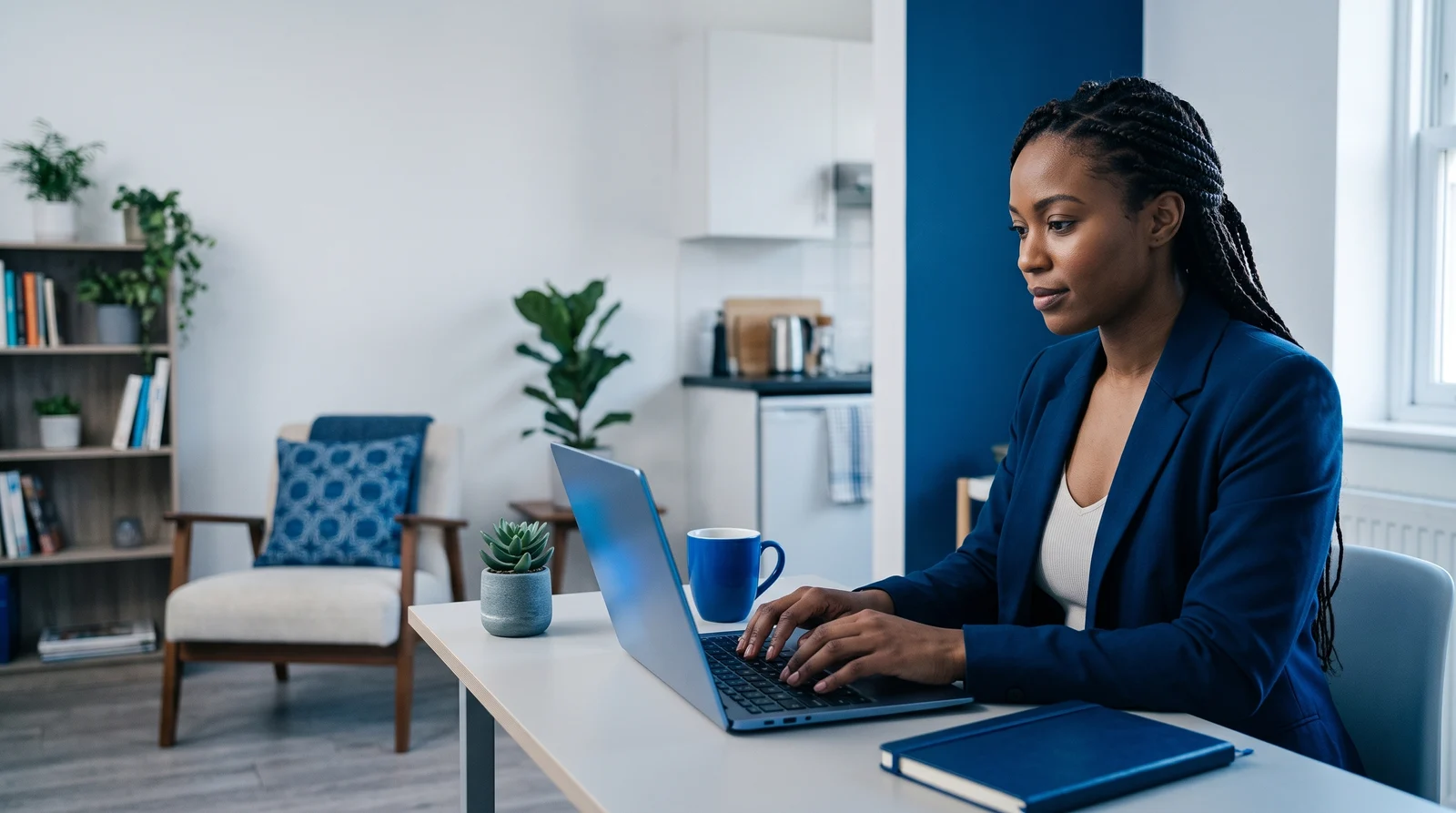
The Art of the 'Digital Commute': Establishing Physical Boundaries in Small Apartments
Defining the 'mental commute' ritual
When workers transition to a home office setup, the most immediate casualty is the physical commute. While nobody misses sitting in morning gridlock, experts argue that we have lost a crucial psychological buffer. Studies from Microsoft Research highlight that commutes historically provided blocks of uninterrupted time for mentally transitioning to and from work, which is an essential element for maintaining emotional homeostasis 2. Without this buffer, remote workers often find themselves emotionally exhausted by the end of the day because they lack a routine for ramping up their focus and subsequently winding down.
In a global workplace study, Microsoft found that introducing a "virtual commute"—a dedicated period at the start and end of the day to mindfully transition—made 61 percent of employees feel 4 more productive. On average, implementing this structured digital commute increased 5 actual productivity by 12 to 15 percent. To replicate this in a small apartment, you must actively schedule 15 to 30 minutes before your first task to read, meditate, or take a short walk around the block. This purposeful separation clearly signals to your brain that the workday is beginning, replacing the boundary that a train ride or highway drive used to provide.
Sensory cues to trigger work mode
In micro-living situations, you cannot always rely on different rooms to dictate different mindsets. If your dining table is also your desk, you must rely on the science of habit formation. According to Dr. Wendy Wood, an expert in behavior change at the University of Southern California, the key to remote work productivity is seamlessly transferring your workplace habits to your home environment. Because a small apartment is traditionally associated with leisure, you need specific sensory cues to trigger a working mindset.
This methodology relates directly to the psychological habit loop: cue, routine, and reward. By introducing distinct sensory triggers, you can train your brain to recognize when it is time to focus. This might involve setting up a specific desk lamp with a cool-toned bulb that is only turned on during working hours, brewing a particular type of coffee, or playing a specific instrumental playlist. Visual and tactile cues matter just as much: hiding the TV remote in a drawer 8 and dressing in professional attire (rather than staying in loungewear) creates a distinct boundary that tells your subconscious you are officially on the clock.
Spatial hacks for micro-living
Carving out a dedicated home office in a small apartment requires strategic design and boundary-setting. When floor space is heavily limited, interior design experts recommend looking upward. Vertical storage solutions, such as floating shelves and wall-mounted organizers, keep your work surface clear of clutter without encroaching on your living area. Furthermore, collapsible furniture, such as fold-out convertible desks or folding chairs, allows you to physically pack away your office at the end of the day, visually reclaiming your home from your employer.
Creating the hidden office
Innovative architectural approaches prove that you do not need a spare bedroom to create a highly functional workspace. Many small-space dwellers have popularized the cloffice—converting a standard closet into a miniature, highly efficient work zone that can be hidden behind a closed door.
In spaces without usable closets, retractable setups are highly effective. For example, some custom micro-apartments utilize recycled paper-based joinery to conceal a comfortable office behind pocket doors, allowing a single room to seamlessly transition from a daytime workstation to a nighttime retreat. Even utilizing simple room dividers, or placing a mirror strategically to reflect light and create the illusion of space, can make a cramped desk setup feel like an expansive corporate hub.
The post-work shutdown routine
Ending the workday is often significantly harder than starting it, especially when your laptop sits mere feet from where you sleep. Achieving "psychological detachment"—the scientific term for completely switching off from work-related tasks and thoughts during non-work time—is critical for your mental well-being and long-term career stamina. Research by Dr. Sabine Sonnentag at the University of Mannheim demonstrates a strong positive relationship between psychological detachment and subsequent job performance. However, she also notes the recovery paradox, where high job stress makes it simultaneously more necessary and much harder to mentally disconnect.
To combat this, remote workers must implement a strict shutdown routine. This is a 5- to 15-minute ritual performed at the very end of your workday to ensure all loose ends are tied up and recorded. A study from Ball State University found that leaving important tasks unfinished is heavily associated with poor psychological detachment in the evening, leading to rumination. By taking a few minutes to document incomplete tasks and plan your priorities for the next morning, you secure mental "loop closure." Conclude this routine with a definitive physical action—closing your laptop lid, clearing your coffee mugs, or verbally declaring the workday over—to formally signal to your brain that the professional day has ended.
Managing noise pollution from neighbors
In multi-family buildings and dense urban apartments, noise pollution is a severe threat to concentration and work life balance. A 2024 global survey by Jabra revealed that 63 percent of knowledge workers struggle to concentrate due to noise, with nearly 65 percent of remote workers specifically affected by external disruptions like neighbors, traffic, and construction.
The cognitive cost of this disruption is highly measurable. A study published by the University of Chicago Booth School of Business found that a mere 10-decibel increase in background noise decreases cognitive function and worker productivity by 5 percent. When you lack the structural control of a traditional corporate facility, you must rely on localized acoustic defense. High-quality active noise-canceling (ANC) headphones have become a non-negotiable tool for the modern remote worker, driving a global market forecast to reach $35.9 billion by 2030. Additionally, utilizing AI-driven noise cancellation software during video calls can eliminate background neighbor noise from your microphone, ensuring professional communication. If your space allows, add soft furnishings, heavy curtains, or temporary acoustic panels to your apartment walls to dampen incoming sound frequencies and reduce echo.
When to leave the apartment for focus
Despite your best efforts to optimize your small apartment, there are times when absolute focus or creative breakthroughs require a total change of scenery. Leaving your apartment can be a highly strategic productivity move, particularly when tackling abstract or creative tasks.
The Coffee Shop Effect
A landmark 2012 study published in the Journal of Consumer Research explored how different levels of ambient noise impact cognitive processing. The researchers discovered that moderate background noise—specifically around 70 decibels, which mimics the typical volume of a bustling café—leads to higher creative output than complete silence(https://vertexaisearch.cloud.google.com/grounding-api-redirect/AUZIYQGuhrFGvgTYZO4ocTGQo2q8F4RFL_twXbvQFaRXSzemrh9n82VqKeg_6Vkw1PXTRvraFbuqw46kgDPqkglU23bEcmTdTtNd_3U5CNm5CDH_0mw3BcxABDet6ZK1IO5GzNFn6ibC5M6iXcjeenHaieix3JNuvFL4ikr69x_oCCg=). This moderate noise induces "processing disfluency," a 19 low-grade mental friction that nudges the brain away from literal, detail-oriented processing and toward broader, more abstract thinking. When you need to brainstorm or solve complex problems, packing up your laptop and heading to a local coffee shop provides both the ideal acoustic environment and a welcome physical break from micro-living.
Taking the digital commute international
For those who find permanent small-apartment living too stifling, the ultimate change of scenery is the digital nomad visa. Over 60 countries now offer legal frameworks for location-independent workers to relocate for extended periods, allowing them to trade their micro-apartments for global exploration.
For example, Japan launched its highly anticipated digital nomad visa in April 2024. This visa allows remote workers from eligible countries to stay for up to six months, provided they can prove an annual income of at least ¥10 million (approximately $64,000 to $65,000) and hold robust private medical insurance(https://vertexaisearch.cloud.google.com/grounding-api-redirect/AUZIYQGwES-9GmzNGiD2uuzjcsiUU-9msYaYs0UojKGNgTekGebHSqsZoKiCPGYtaocEVpev0WCrm8Gls-cRr_JPnfxR9yTKUBzpnUoykl0AZLC3POi7Km1OyVOk46O50hDO6v4C0-AKmeTF0s8MWjgxPNUI_kq134pEIVVySBjWGvr1jGjva28pXxMKSiL2b8poJ-4aUbnz6sRtq_RfBioXKjDXx4Zo3-QdVNZ-aNPzXJoHxCeKAFU=). Alternatively, European destinations remain highly accessible and popular; Spain's digital nomad visa requires a proven income of roughly €2,646 per month, while Portugal's widely utilized D8 visa requires €3,480 per month. Whether it is an afternoon at a local café or a six-month stint in Tokyo, knowing when to leave your home office is just as important as knowing how to optimize it.
Key Takeaways
- Implement a "virtual commute" to create uninterrupted mental transition time, a practice shown to boost productivity by up to 15 percent.
- Use distinct sensory triggers—like dedicated desk lighting, professional attire, and specific playlists—to signal to your brain that it is time for work.
- Maximize small spaces with vertical storage, collapsible furniture, and hidden "cloffice" setups to keep work and life physically separate.
- Protect your cognitive function from neighborhood noise pollution with active noise-canceling technology and sound-dampening apartment furnishings.
- End your day with a strict 5- to 15-minute shutdown routine to achieve psychological detachment, ensuring all open tasks are documented for tomorrow.
- Leverage the "Coffee Shop Effect" (approximately 70 decibels of ambient noise) for creative tasks, or explore international digital nomad visas for a complete environmental reset.