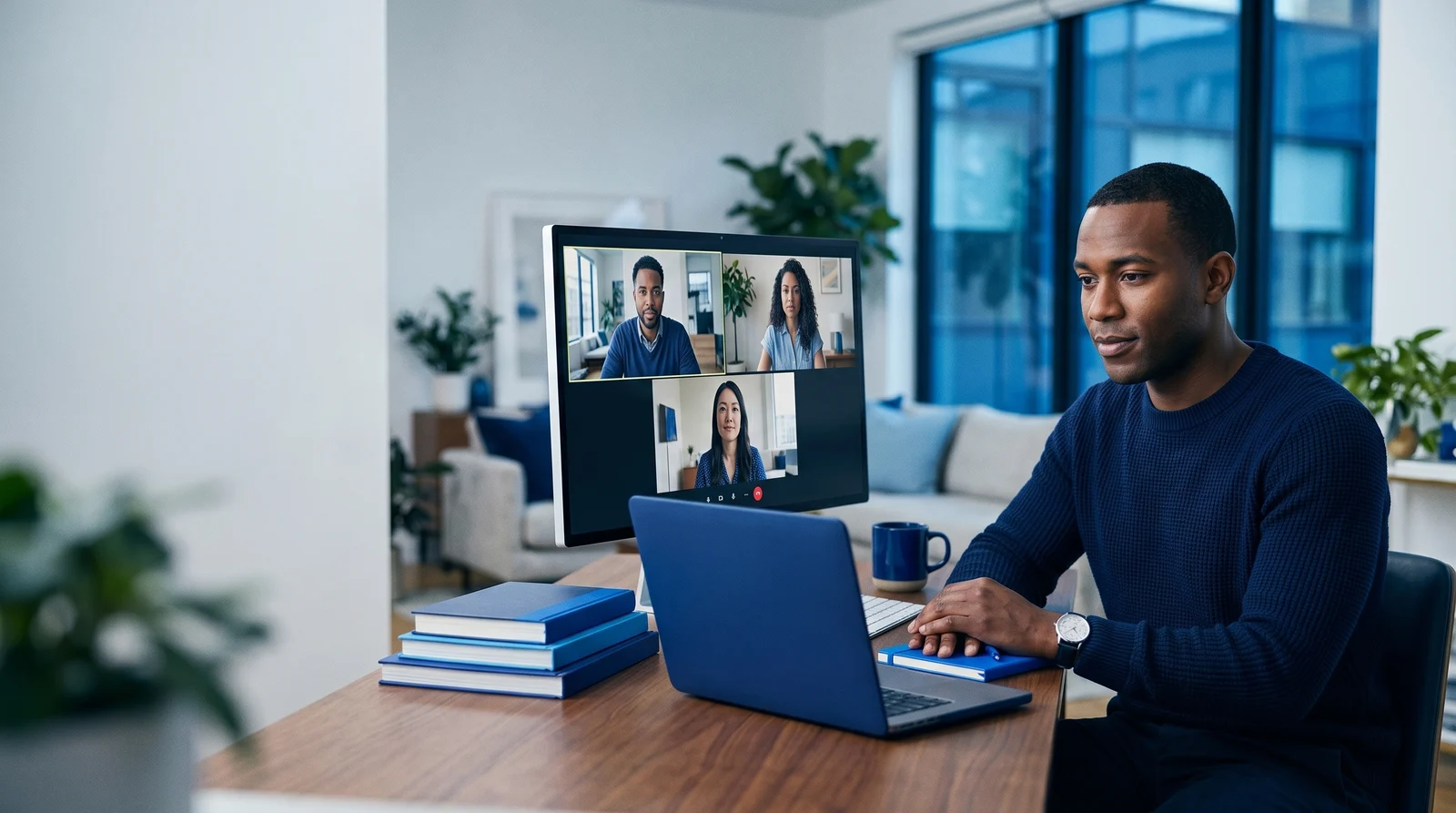
The Remote Performance Review: Moving Beyond Annoying Check-ins
The Remote Performance Review: Moving Beyond Annoying Check-ins
Key points indicate that traditional evaluation cycles are largely obsolete in distributed environments; continuous feedback systems significantly drive employee engagement; and mitigating proximity bias is essential for equitable career advancement. While the transition to distributed teams offers unprecedented flexibility, it has simultaneously exposed the inadequacies of conventional performance reviews. The shift away from annual, often frustrating check-ins toward a culture of continuous employee feedback requires a strategic overhaul of remote management practices. Evidence suggests that organizations adopting data-driven, equitable evaluation methods not only mitigate inherent biases but also foster stronger leadership and higher productivity. This report explores the fundamental flaws of the traditional review cycle and outlines practical, evidence-based steps for implementing a modern performance management system tailored for remote and hybrid teams.
The Flaw of Annual Reviews in a Fast-Paced Remote Environment
In a traditional office setting, managers historically relied on physical presence and informal observations to gauge employee productivity. However, applying this static evaluation model to a dynamic remote environment has proven highly ineffective. Current research demonstrates a near-universal consensus among leadership regarding the failure of traditional evaluations; more than 75% of HR leaders believe annual performance reviews do not accurately reflect employee contributions. Furthermore, 95% of managers express profound dissatisfaction with their organization's annual performance management processes.
The fundamental issue stems from a phenomenon known as productivity paranoia. A 2022 Microsoft Work Trend Index study revealed a massive visibility gap: while 87% of employees report being highly productive at work, 85% of leaders state that the shift to hybrid work has made it challenging to have confidence that their employees are actually being productive. This disconnect often leads to micromanagement—with 68% of remote employees in some regions reporting feeling micromanaged by their managers—and a reliance on recency bias during annual reviews, where managers only recall an employee's most recent weeks of work rather than the entire year.
To understand the structural shift required in remote management, consider the comparative differences between traditional and modern performance models:
| Metric | Traditional Office Model | Modern Remote Model |
|---|---|---|
| Evaluation Cadence | Annual or bi-annual | Continuous, monthly, or bi-weekly |
| Primary Measurement | Hours logged and visual presence | Quantifiable outputs and project completion |
| Managerial Focus | Past performance evaluation | Future-focused development and coaching |
| Feedback Mechanism | Formal, one-way top-down reviews | Two-way dialogue and 360-degree input |
| Primary Risk | Recency bias | Isolation and proximity bias |
By the time an annual review occurs, the feedback is often outdated and unactionable, rendering it a compliance exercise rather than a tool for meaningful professional growth.
Implementing Monthly Continuous Feedback Loops
To combat the stagnation of annual reviews, forward-thinking organizations are adopting continuous feedback loops. The demand for this shift is driven largely by the workforce itself; a staggering 96% of employees state that receiving regular feedback is a primary driver of their daily motivation. Despite this overwhelming preference, less than 30% of global workers consistently receive the feedback they need to thrive.
The Business Case for Frequent Check-ins
Transitioning from an annual review to a structured monthly or bi-weekly cadence yields measurable operational benefits. Research indicates that remote workers receiving regular informal feedback experience a 20% uptick in engagement and overall output compared to those relying solely on formal annual evaluations. Furthermore, employees who receive daily or weekly meaningful feedback from their managers are 3.6 times more likely to feel motivated to excel.
Structuring the Continuous Loop
Implementing continuous employee feedback in a remote setting requires intentional scheduling. Without the informal "water cooler" moments of a physical office, managers must establish recurring one-on-one meetings dedicated to goal progress, developmental blockers, and priority alignment. These touchpoints should not be punitive; instead, they must focus on coaching and real-time course correction. When organizations replace the anxiety of an annual review with the predictability of continuous, constructive dialogue, they reduce turnover risks and build a culture of psychological safety where remote staff feel genuinely supported.
Preparing Data-Driven Performance Conversations
In the absence of physical oversight, remote management must pivot from subjective observations to objective, quantifiable outcomes. Data-driven performance reviews are systematic evaluations that analyze an individual's or a team's performance based on concrete metrics rather than managerial gut feelings.
When preparing for these conversations, leaders should utilize goal-tracking metrics, project completion rates, and outcome-based Key Performance Indicators (KPIs) to guide the discussion. Utilizing transparent data ensures that expectations are explicitly measurable and directly aligned with overarching business goals. This approach significantly reduces personal bias and provides a fair baseline for evaluating distributed team members.
Leveraging Modern HR Technology
The integration of cloud-based platforms and artificial intelligence has revolutionized how performance data is gathered. Modern AI-driven analytics can track real productivity metrics—such as code deployment frequency, sales conversion rates, or ticket resolution times—without resorting to invasive surveillance or micromanagement. Furthermore, analyzing workflow data in aggregated, ethical ways helps HR teams identify bottlenecks and workload imbalances. By arming themselves with objective data before a monthly check-in, leaders can shift the tone of the conversation from defensive justifications to collaborative, solution-oriented professional development.
Self-Assessment Strategies for Remote Employees
Performance reviews are inherently a two-way dialogue, and in a remote environment, the onus of visibility falls equally on the employee. Because remote workers lack the physical presence that quietly communicates diligence and pressure management, they must actively document and articulate their contributions.
Fostering Self-Directed Career Management
Recent academic studies from 2026 highlight that self-directed career management is vital for sustaining long-term success in digital ecosystems. Remote workers must employ proactive behaviors such as intentional upskilling, job crafting, and structured boundary management to maintain their employability and mental well-being.
Effective self-assessment involves an honest evaluation of one's communication proficiency, self-discipline, and technological adaptability. Employees should be encouraged to utilize behavioral tools, such as the DiSC assessment, to better understand their own working styles and how they interact with their managers and peers.
Documenting Invisible Work
To prepare for performance conversations, remote employees should maintain a continuous "brag document" or portfolio of their achievements. This practice ensures that invisible work—such as assisting colleagues behind the scenes, streamlining internal processes, or defusing client escalations—is properly recognized. When employees actively participate in their evaluations through thorough self-assessment, they bridge the visibility gap and ensure that their managers have a complete picture of their holistic organizational impact.
Addressing Skill Gaps Through Virtual Coaching
One of the most significant casualties of the remote work transition has been the loss of observational learning. In a traditional office, junior employees often absorb institutional knowledge through osmosis—overhearing senior colleagues handle complex calls or casually asking questions across a desk. To replicate this development in a distributed workforce, organizations must implement robust virtual coaching programs.
The Impact of Deliberate Coaching
Relying on informal or random coaching in a remote setting is highly inefficient. For example, data from CSO Insights reveals that 75% of sales organizations waste resources due to random and informal coaching approaches. Conversely, companies that deploy dynamic, structured virtual coaching programs have reported up to a 47% improvement in win rates and a 60% decrease in employee ramp time.
Executing Virtual Mentorship
To effectively address skill gaps, leadership must utilize technology to observe and guide employee performance. This involves recording client interactions, utilizing conversation intelligence software (such as AI-generated transcripts and sentiment analysis) to pinpoint precise areas for improvement, and reviewing these interactions during continuous feedback sessions. Furthermore, establishing internal mentorship programs creates a sense of stability; 68% of remote employees with dedicated mentors report significantly higher job satisfaction. Virtual coaching transforms the performance review from a retrospective grading system into a forward-looking, skill-building partnership.
Ensuring Equitable Evaluation for Remote Staff
Perhaps the most critical challenge in modern performance management is ensuring fairness across distributed, hybrid, and in-office teams. The human tendency to favor those physically closest to us—known as proximity bias—poses a severe threat to the career trajectories of remote professionals.
The Cost of Proximity Bias
Statistics illustrate a troubling disparity: 64% of managers believe that in-office workers are higher performers than remote workers, solely based on physical presence. Consequently, remote staff are frequently excluded from crucial informal meetings and stretch assignments. The career impact is highly tangible; recent data indicates that fully remote workers were promoted 31% less often than their fully in-office or hybrid counterparts, despite delivering comparable or superior output.
Strategies for Objective Evaluation
To dismantle this bias, organizations must decouple visibility from value. Performance appraisal systems must be strictly designed around productivity and quantifiable outputs rather than hours spent online or in a physical seat.
Leadership should implement the following strategies to ensure equity:
- Quarterly Advancement Audits: Regularly review promotion and raise distribution lists to ensure remote workers are receiving fair consideration.
- 360-Degree Feedback: Collect performance data from a variety of sources—including peers, direct reports, and cross-functional collaborators—to paint a comprehensive picture of an employee's impact.
- Standardized Rubrics: Evaluate all employees against identical, predefined performance rubrics to prevent subjective interpretations of effort.
By actively monitoring and correcting for proximity bias, organizations can retain top remote talent, maintain high morale, and build a truly meritocratic culture.
Key Takeaways
- Annual reviews are outdated: Over 75% of HR leaders acknowledge that yearly evaluations fail to accurately reflect modern employee contributions.
- Continuous feedback drives engagement: Implementing bi-weekly or monthly feedback loops can boost remote employee engagement and productivity by 20%.
- Rely on data, not visibility: Use concrete KPIs, project completion rates, and AI-assisted analytics to drive objective performance conversations.
- Encourage proactive self-assessment: Remote employees must document their "invisible work" and practice self-directed career management to maintain visibility.
- Invest in structured virtual coaching: Replace lost "water cooler" learning with deliberate, technology-enabled coaching to systematically close skill gaps.
- Actively combat proximity bias: Audit promotion rates and utilize 360-degree reviews to ensure remote workers are evaluated on output rather than mere physical presence.